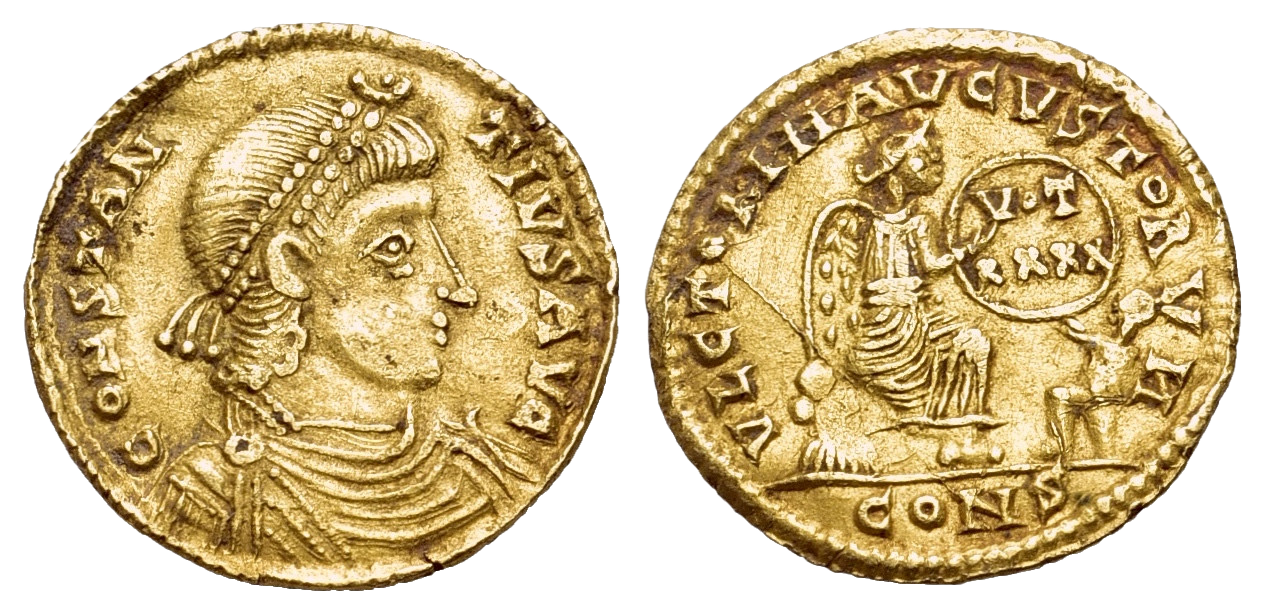

Uncertain Germaic Tribes. Pseudo-Imperial coinage, imitating Constantinople AV Nine-siliqua (16mm, 1.83g, 6h) in the name of Constantius II, c. AD 355-361.
Uncertain Germaic Tribes. Pseudo-Imperial coinage, imitating Constantinople AV Nine-siliqua (16mm, 1.83g, 6h) in the name of Constantius II, c. AD 355-361. CONStAN-TIVS AVG (sic), pearl diademed with central jewel, draped and cuirassed bust right. R/ VLCTORIA AVGVSTORVN (sic), Victory seated right on cuirass, supporting on left knee a shield on which she inscribes VOT / XXXX; in exergue, CONS. Unpublished in the standard references, for prototype cf. RIC VIII, p. 459, 130; Depeyrot p. 232, 5/4; RCV V, 17828. Good VF
Note
Robert Carson in RIC VIII p. 232, 130 cites only one regular example for the mint of Constantinople of a gold nine-siliqua of 1½ scruples, now in the Belgrade National Museum. However, the above example cannot be a regular issue due to its awkward epigraphy and barbaric engraving style. The coinage of Constantius II and Julian II were widely imitated by the Germanic invaders of the Balkans from the 360s, of which most to have survived are the widely spread FEL TEMP REPARATIO and SECVRITAS REI PVB Æ types, cf. A. Sergeev, Barbarian Coins on the Territory between the Balkans and Central Asia, Moscow, 2012, pp. 86-89.


